 Only Official Site
 BUY TICKETS


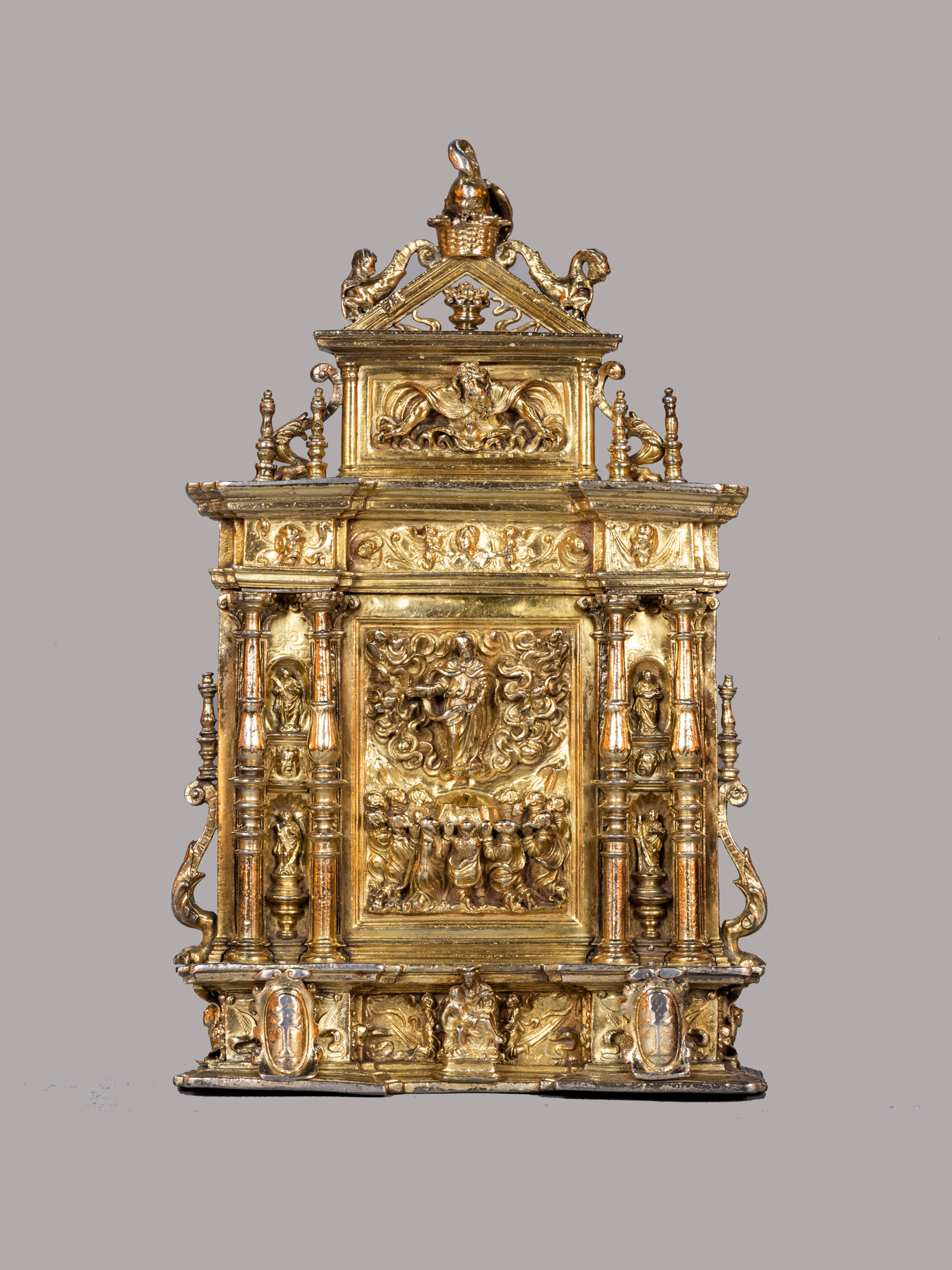
The paxbrede is the utensil with which peace was given to the faithful in churches. In ancient times and the Middle Ages, this Catholic liturgical object was used for the “kiss of peace”, transmitting fraternity among the faithful without direct contact; the deacon carried the object, and the faithful kissed it instead of kissing or embracing each other.
They were usually made of precious metals such as silver and gold, ivory, enamel, crystal or other decorative materials and had a table or plate decorated with reliefs or religious images, such as scenes from the life of Christ or the Virgin, or representations of saints. They had a handle on the back for easy holding.
From the 13th century onwards, it became popular in the Catholic liturgy and on occasions, two paxbredes were used to give peace separately to men and women. After the Second Vatican Council, the use of the paxbrede became obsolete with the reintroduction of the greeting of peace for all the faithful.
In the Cathedral of Seville, various examples are kept that give a good sample of the use of these pieces. We focus on the Paxbrede of the Ascension of the Lord. It was commissioned in 1556 together with another with which it is paired dedicated to the Assumption of the Virgin. In the Renaissance style of the Sevillian school, in chiseled and gilded silver, with dimensions of 29 x 17 x 8 cm and made entirely by the Master Silversmith of the Seville Cathedral Hernando de Ballesteros el Viejo, who on August 7 of this year charged 30 ducats for the gold invested in the gilding of both pieces and on August 31, coinciding with its appraisal, received the settlement of the making.
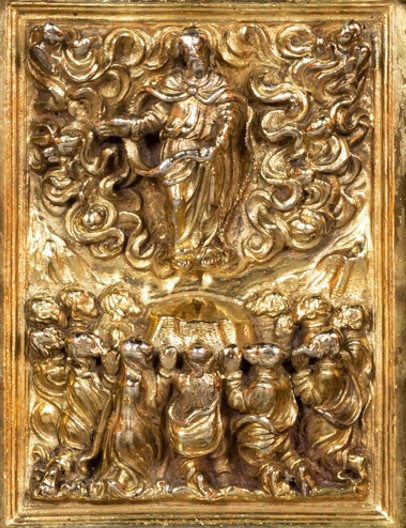
It has the form of an altarpiece with three sections, a base, a first body, a cornice and an attic. The iconographic program includes a small relief of the Pietà on the base.
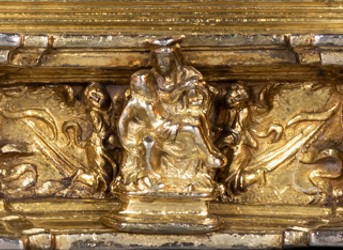
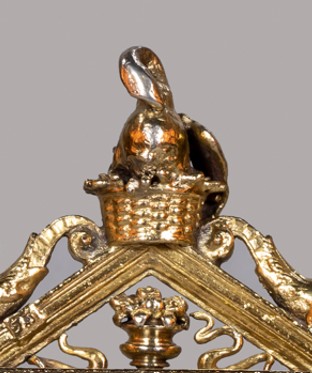
The central scene represents the Ascension of the Lord, while the four evangelists have been represented in small niches in the side sections. In the attic, the Eternal Father with the Dove of the Holy Spirit has been placed. The whole is finished off with the Eucharistic Pelican that cares for its young in a basket. In the attic on the reverse, the Annunciation has been represented, while in the area of the base, different biblical scenes such as the sacrifice of Isaac and the fable of the Unicorn have been placed.