
 Only Official Site
 BUY TICKETS


Entering Seville Cathedral means crossing a threshold where time seems to stand still and silence is filled with prayer and the memory of those who sought to reflect the greatness of God on earth. Beneath its soaring vaults, the temple protects not only the sacred space, but also the eternal footprint of clerics, kings, explorers, saints, artists, nobles, merchants, and other illustrious figures whose lives were forever joined to the stones of this building. Every corner, every light filtering through the stained glass, and every crypt tells a continuous story of art, faith, and devotion that turns the visit into a close encounter with great historical figures.
It is worth noting that the names gathered in this text represent only a sample of the immense catalog of personalities who, throughout the centuries, have left their mark on the temple. Many other illustrious names also await discovery by the visitor in every chapel and corner of the Cathedral.
The Royal Pantheon and Warrior Lineages
The journey through this living memory always begins in the Royal Chapel, the heart of royalty where the great King Ferdinand III the Saint rests in his silver urn, maintaining his spiritual protection over the city he united with the Crown of Castile in the 13th century. Beside him, the continuity of the royal family and knowledge are displayed in the tomb of his son, Alfonso X the Wise, whose heart rests next to the altar as a testament to his love for the arts and sciences of the medieval era.


In the subsoil of this same sacred space, the quiet crypt welcomes Queen Beatrice of Swabia, who brought the legacy of the Byzantine emperors, and King Peter I of Castile, who shares his eternal rest with his beloved María de Padilla, declared queen after her death in a well-remembered turn of Castilian history.
Very close to them, the Infante Fadrique Alfonso of Castile, of the Order of Santiago, completes this group of noble warriors, while the memory of the grand baptism of the Infante John of Aragon, son of the Catholic Monarchs, takes us back to the days when the temple was dressed in finery to celebrate royal births.
Navigators and Scholars of a New World
Moving toward the transept of the temple, the history of the cathedral opens to the age of great discoveries, when Seville became the main port of the New World. There lies the grand tomb of Christopher Columbus, held with respect by the figures of the four historical kingdoms of Spain, whose remains rest here definitively after crossing the ocean. The memory of the great American adventure continues in the retrochoir with the tomb of his son, the scholar Hernando Colón, a man of universal knowledge whose enormous passion for books gave rise to the Colombina Library, an intellectual treasure that still enriches the walls of the temple today and forms part of the Archives and Libraries of Seville Cathedral.

Protectors of the Faith and Illustrious Dignitaries
This immense construction would not have been possible without the work of the great Church authorities who dedicated their lives to the greatness of the archdiocese. Among them stands out Archbishop Alonso de Egea who, at the beginning of the 15th century, promoted the first plans to erect the current temple on the foundation of the ancient mosque, an ambitious vision that would lay the groundwork for the final project decades later.
The mark of this spiritual achievement can be seen in works of art of great value, such as the alabaster tomb of Cardinal Juan de Cervantes, a jewel of late Middle Ages art, or the marble tomb of Cardinal Diego Hurtado de Mendoza, created by Domenico Fancelli in the Chapel of la Antigua. By the early 20th century, a more contemporary devotion is observed in the tomb of Blessed Marcelo Spínola, the archbishop who continues to inspire the faithful from his corner in the Chapel of Sorrows.


The spiritual life of the temple is completed by its patron saints, whose relics are kept with great devotion: the patronesses Justa and Rufina, the brave potters traditionally associated with Triana to whom tradition attributes the saving of the Giralda during ancient earthquakes, and the learned brothers Saint Isidore and Saint Leander, archbishops of the Visigothic era who preside over the temple’s celebrations.


A Living Museum of Universal Geniuses
Finally, the cathedral presents itself as a stage where great artists left their faith engraved in wood, canvas, and glass for the future. The very structure of the temple owes its beauty to creators such as the Flemish master Pieter Dancart, who began the Main Altarpiece—the largest in the Christian world—whose paintings were completed by the Renaissance artist Alejo Fernández.


The celebrated 16th-century goldsmith and silversmith Juan de Arfe left an indelible mark on the history of the temple by designing and crafting the monumental silver Monstrance. This impressive work of art, which processes every year through the city streets on the feast of Corpus Christi, is a living display of Sevillian faith and one of the great artistic milestones kept inside the cathedral.

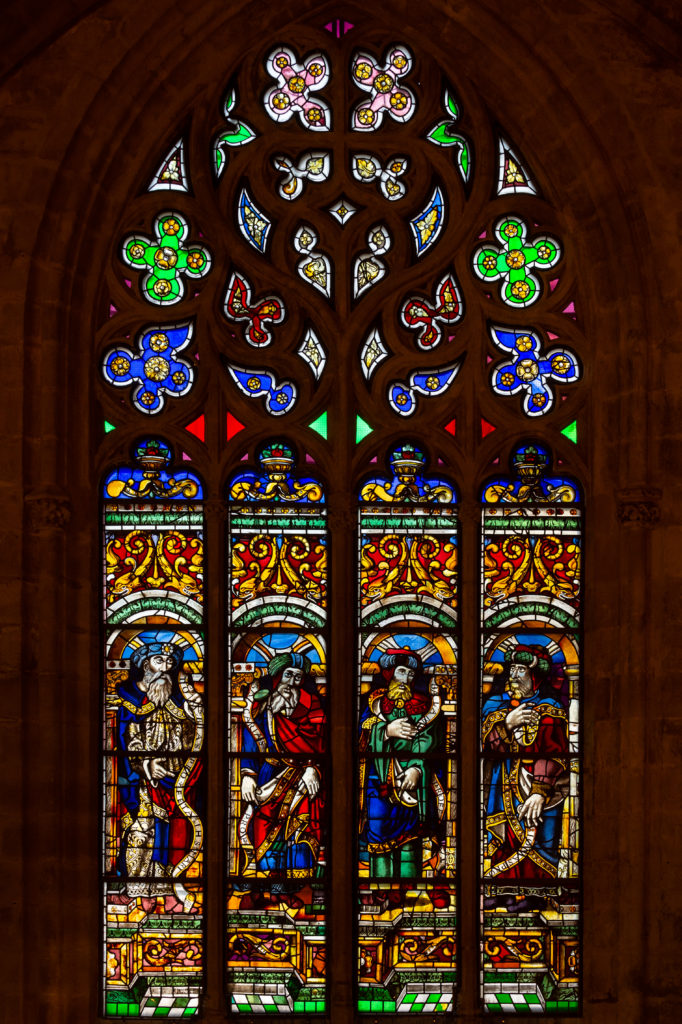
This sacred light that floods the naves takes on meaning through its impressive collection of historical stained glass windows, where great master glaziers such as Enrique Alemán in the 15th century, or Arnao de Flandes and his son Arnao de Vergara in the 16th century, depicted passages of sacred history with colored glass, turning the windows into a catechism of light that has accompanied the prayers of generations of the faithful.


The sense of inner reflection is profound before the legacy of the master Juan Martínez Montañés, who not only moves us with his Christ of Clemency in the Chapel of Saint Andrew, but also defined the way we look at the Virgin Mary by sculpting the famous image of the Immaculate Conception, affectionately called “La Cieguecita” (The Little Blind Girl). This eternal work, located in its own chapel, draws the world’s attention for its downcast eyes and for the color given to it by the painter Francisco Pacheco, master and father-in-law of Diego Velázquez.


Following this great tradition of sacred sculpture, the patriarch Pedro Roldán also shows the strength of his work in the cathedral with his reliefs of the Passion and his images of Saint Ferdinand, capturing in wood a strength and movement that invite prayer.

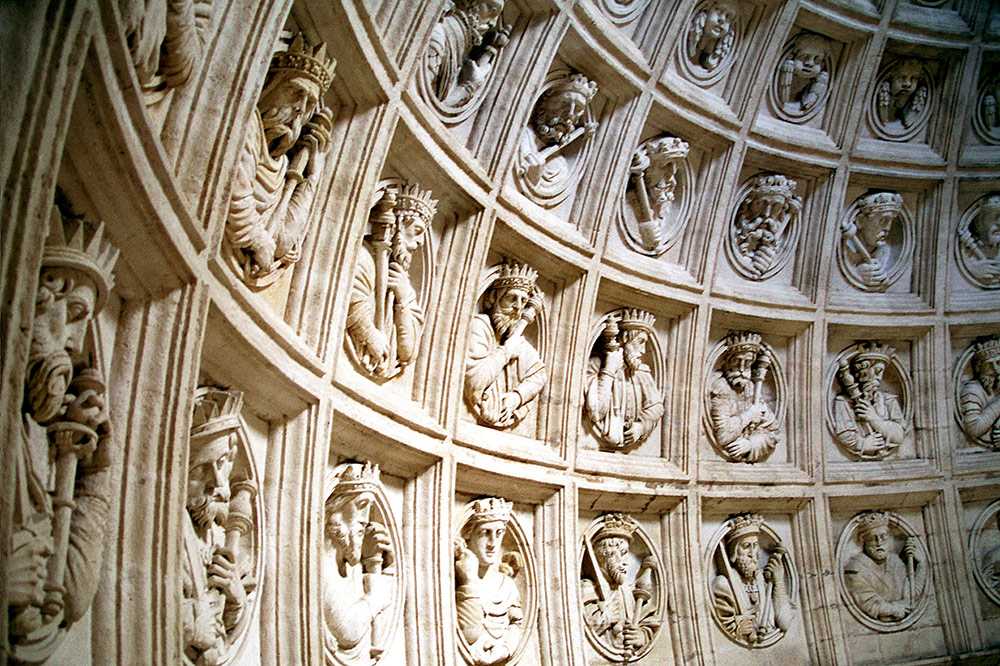
The walls of the temple also speak through painting, where the local genius Bartolomé Esteban Murillo showed all his sensitivity toward the Faith. His importance in the temple is enormous: in addition to his famous paintings of the Vision of Saint Anthony and The Baptism of Christ, the Cathedral holds the portrait of Saint Ferdinand, where the painter created the image of the saint king, and the artistic decoration of the Chapter House, presided over by his beautiful Immaculate Conception and surrounded by the eight tondi of Sevillian saints that fill the space with a celestial atmosphere.


Alongside him, Francisco de Goya left a sample of his great power by painting the portrait of Saint Justa and Saint Rufina created especially for the Sacristy of the Chalices. To this group of great painters, Francisco de Zurbarán must be added, the great master of religious painting from the Spanish Golden Age, whose works can be admired on several altars and in the moving canvases kept in the sacristy.


Each figure remembered in these naves brings their own accent to a single spiritual heritage, inviting whoever crosses the temple doors to discover the soul of a Church that continues to care, with gratitude and dedication, for the reflection of divine beauty through time.
Visitor Information
To tour and discover the chapels, tombs, and works of art that safeguard the legacy of these illustrious figures, you can purchase tickets at the following link: https://catedraldesevilla.servitickets.es/
The Cathedral Chapter facilitates access to culture, history, and faith through an inclusive pricing policy. General admission always includes combined access to the Temple, the Giralda, and the Collegiate Church of the Divine Savior.
Daily Free Access
The following are entitled to free admission every day of the year, provided they duly prove their status with an official document at the temple entrances:
- Minors: All children from any country, province, or origin up to and including 13 years of age (provided they are accompanied by an adult).
- Natives or residents: People born or registered as residents within Seville and its province.
- Disability: Persons with a certified degree of disability equal to or greater than 65% (entitled to one free companion if the official card specifies it).
- Unemployed: National citizens in a situation of legal unemployment.
Reduced Rate Tickets
To support access for specific groups, the Cathedral has a reduced rate applicable to:
- Large families: Adults belonging to family units officially recognized under this title (requires presenting a valid Large Family book).
- Students: Young people of any nationality up to and including 25 years of age (with a valid student ID or enrollment certificate).
- Seniors and pensioners: People over 65 years of age or pensioners with an official supporting document.
- Moderate disability: Persons with a recognized degree of disability between 33% and 64%.
General Free Visit on Sundays
The Chapter offers a quota of free access, by prior reservation, for the general public on Sunday afternoons, except on dates of special liturgical festivities.